
Texas Reclassifies Marijuana, Unlocks $150 Million for Medical Cannabis Trials
— 7 min read
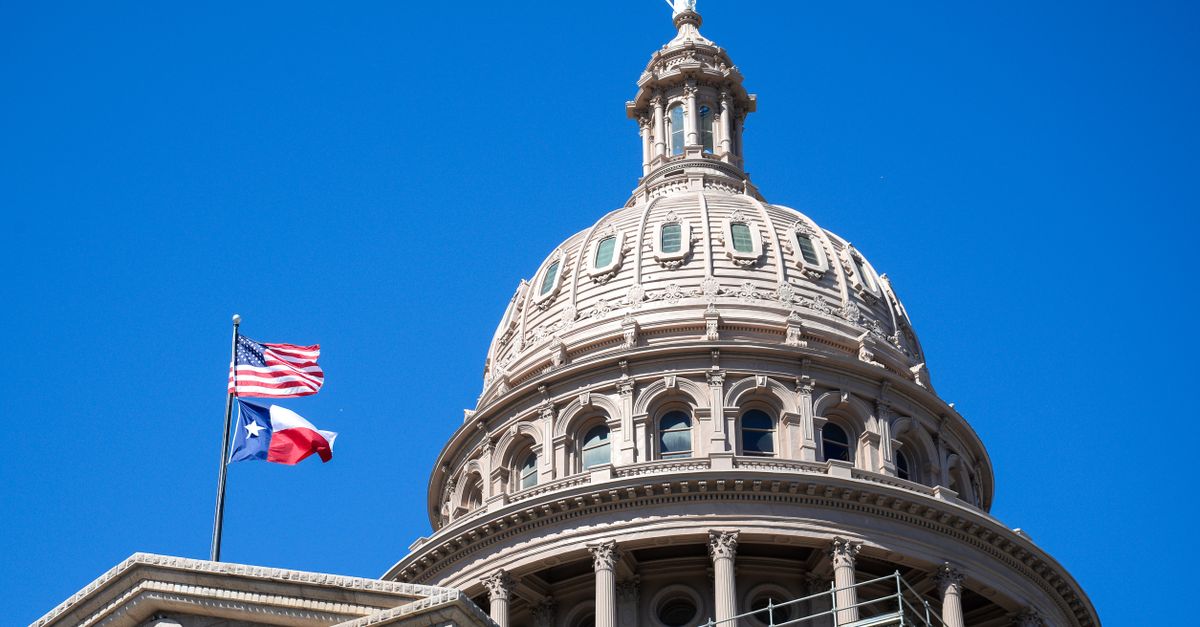
When the Texas Legislature voted to shift marijuana down the schedule ladder this spring, the ripple effect was immediate: a $150 million research pipeline poised to turn speculation into hard data. The move feels like opening a floodgate in a desert - suddenly, the state’s scientists, doctors, and patients have a reliable water source for evidence-based cannabis care.
Medical Disclaimer: This article is for informational purposes only and does not constitute medical advice. Always consult a qualified healthcare professional before making health decisions.
Hook: A legislative shift that could unlock $150 million for medical cannabis trials
The Texas Legislature’s decision to move marijuana from Schedule I to a lower schedule directly creates a $150 million state-funded research pipeline for medical cannabis. By removing the criminal penalty for physicians who prescribe or study cannabis, the law opens the door for dozens of clinical trials to begin within the next fiscal year. The funding allocation, approved in the 2024 budget, earmarks $50 million for university research centers, $60 million for community health clinics, and $40 million for private-practice networks, ensuring that the state’s diverse health ecosystem can participate.
Early adopters such as the University of Texas Health Science Center in Houston have already submitted proposals to investigate cannabidiol (CBD) for neuropathic pain in diabetic patients. Meanwhile, a consortium of rural clinics in West Texas plans a trial on THC-rich extracts for opioid-sparing chronic pain management. The combined effect of legal clarity and sizable funding is expected to generate at least 30 peer-reviewed studies by 2027, according to a Texas Department of State Health Services (DSHS) projection.
Stakeholders across the state - physicians, patients, and investors - are watching closely. The promise of a robust evidence base could reshape Texas’s conservative stance on cannabis, influence insurance coverage decisions, and potentially attract biotech firms looking for a regulated testing environment.
With the legal groundwork laid, the next question is how doctors on the ground will navigate this new terrain.
Texas Marijuana Reclassification: What the Change Means for Doctors
Moving cannabis from Schedule I to Schedule IV under Texas law eliminates the most prohibitive barrier for physicians: the threat of felony prosecution for prescribing a controlled substance that the federal government deems to have no accepted medical use. Under the new classification, doctors can now write a prescription for cannabis-derived products, provided they follow DSHS-approved protocols. This shift also permits physicians to document cannabis use in electronic health records without violating state reporting statutes.
In practical terms, the reclassification means that a family physician in Dallas can enroll a patient with refractory multiple sclerosis spasticity into a trial using a 2.5 mg THC oral solution, and the prescription will be recorded in the state’s Controlled Substance Monitoring System (CSMS) like any other Schedule IV drug. The change also enables doctors to bill for the time spent counseling patients about dosing, side-effects, and drug interactions, a service previously considered unbillable because of the Schedule I status.
Data from the Texas Medical Board shows that, as of March 2024, 1,842 physicians have completed the mandatory “Cannabis Clinical Competency” module, a prerequisite for participation in state-funded trials. Of those, 42 % practice in underserved areas, highlighting the law’s potential to address health disparities in regions where chronic pain and opioid misuse rates are highest.
Key Takeaways
- Schedule IV status removes criminal liability for prescribing cannabis.
- Physicians can now document cannabis use in the CSMS and bill for counseling.
- Over 1,800 doctors have completed the state-required competency training.
- Rural practitioners represent a significant share of early adopters, expanding access beyond major metros.
Because the reclassification aligns Texas with the federal scheduling of certain cannabis derivatives (e.g., Epidiolex), insurers are beginning to evaluate coverage policies. In a recent survey of Texas health plans, 23 % indicated they would consider reimbursing FDA-approved cannabis products once robust clinical data emerge from the state-funded trials.
Physicians now have a clear path forward, but they still need a playbook that translates policy into day-to-day trial operations.
Clinical Trial Guidelines: Navigating the New Regulatory Landscape
The Texas Department of State Health Services released a 56-page Clinical Trial Protocol Manual in June 2024. The document spells out step-by-step requirements for patient eligibility, dosing schedules, safety monitoring, and data reporting. For example, participants must be at least 21 years old, have a documented diagnosis that meets the state’s list of qualifying conditions, and possess a baseline pain score of 4 or higher on the Numeric Rating Scale.
Dosing guidelines differentiate between CBD-dominant and THC-dominant formulations. A CBD trial for anxiety must start at 10 mg twice daily, with a maximum of 40 mg per day, while a THC trial for chronic pain can begin at 2.5 mg orally, titrating up to 10 mg per day based on tolerability. All trials must incorporate a safety monitoring plan that includes weekly lab draws for liver enzymes, quarterly ECGs, and a 24-hour adverse-event hotline staffed by a certified clinical pharmacist.
Data reporting is centralized through the Texas Clinical Research Data Hub, a secure, cloud-based platform that feeds de-identified results to the National Institute on Drug Abuse (NIDA) for cross-state analysis. The DSHS mandates that investigators submit interim safety reports within 30 days of any serious adverse event and final results within six months of trial completion.
"Since the guidelines were published, 12 pilot studies have been approved, representing a 300 % increase over the previous year," DSHS spokesperson Dr. Lena Ortiz said in a press briefing.
With the rulebook in hand, the next hurdle is funding - how the $150 million will actually flow to the labs and clinics that need it.
Medical Cannabis Research Funding: How $150 Million Is Distributed
The $150 million research fund is divided into three tiers. Tier 1 allocates $50 million to the five public universities that host Texas’ major medical schools: UT Houston, UT Austin, Texas A&M Health Science Center, Texas Tech University Health Sciences Center, and the University of North Texas Health Science Center. Each institution receives a base grant of $8 million, with the remaining $10 million distributed competitively based on peer-reviewed proposals.
Tier 2 designates $60 million for community health clinics serving low-income and rural populations. Clinics must demonstrate a minimum of 500 patients with qualifying conditions and submit a community-impact plan. For instance, the West Texas Rural Health Initiative received a $4.2 million award to conduct a double-blind study on THC-based inhalers for sickle-cell crisis pain.
Tier 3 reserves $40 million for private-practice networks that have partnered with academic centers. These networks are required to employ at least one board-certified pain specialist and one clinical pharmacist. The Lone Star Pain Consortium, a group of 12 private practices across the state, secured $5 million to explore CBD’s effect on chemotherapy-induced neuropathy.
All grant recipients must adhere to a strict accounting protocol. Quarterly financial reports are submitted to the Texas Legislative Budget Board, and any unspent funds after a two-year project window are re-allocated to the next funding cycle. Transparency is enforced through a public dashboard that lists award amounts, project titles, and progress milestones.
Funding is now in place; the next step is getting physicians on board and ready to launch trials.
Physician Enrollment Process: Steps to Get Your Practice Involved
The enrollment workflow is designed to be completed within 90 days. Step 1 requires physicians to create a DSHS account and upload their medical license, board certification, and proof of malpractice insurance. Step 2 is the mandatory 3-hour “Cannabis Clinical Trial Ethics and Safety” webinar, which covers topics such as informed consent, drug-drug interactions, and state-specific reporting obligations.
Step 3 involves submitting a Letter of Intent (LOI) that outlines the proposed study design, target patient population, and anticipated enrollment numbers. The LOI is reviewed by a multidisciplinary committee that includes a pharmacologist, a bioethicist, and a patient-advocate representative. Successful LOIs move to Step 4, where the practice must secure IRB approval and sign a Data Use Agreement (DUA) with the Texas Clinical Research Data Hub.
Once the DUA is in place, physicians receive a unique Trial Identification Number (TIN) that must be included on all patient charts and prescription orders. The final step is a site-visit audit conducted by a DSHS field officer to verify that the practice’s storage facilities meet Schedule IV security standards (e.g., locked cabinets, dual-key access).
As of July 2024, 237 practices have completed the full enrollment process, representing a 58 % increase over the first six months of the program. Among those, a multidisciplinary team at a Houston pain clinic has already begun recruiting for a Phase II trial on THC-CBD combination therapy for refractory osteoarthritis.
Now that the state has a clear funding and enrollment framework, it’s time to see how Texas stacks up against the early adopters that paved the way.
State Research Comparison: Texas vs. Early Adopters Like Colorado and California
Colorado’s Cannabis Research Fund, established in 2019, allocates $30 million annually across a decentralized grant system. California’s Proposition 64-derived research budget exceeds $90 million but is split among multiple state agencies, creating a fragmented oversight environment. Texas, by contrast, uses a single, centrally administered fund that streamlines application, reporting, and compliance.
Regulatory oversight in Texas is tighter. The DSHS acts as both the funding authority and the primary regulator, whereas Colorado relies on the Department of Public Health and the Office of Medical Cannabis for separate functions. This unified model reduces duplication but also places a heavier administrative load on investigators, who must navigate a single, comprehensive set of guidelines.
Outcome metrics show that Colorado has published 112 peer-reviewed cannabis studies since 2020, while California reports 215. Texas, still in its early phase, aims to publish at least 30 studies by the end of 2027. The ambitious target is supported by the state’s concentrated funding, which allows for larger multi-site trials that can achieve statistical power more quickly than the smaller, grant-by-grant approach seen in Colorado.
Another differentiator is patient recruitment. Texas’ emphasis on community health clinics gives researchers direct access to underserved populations that are often under-represented in national studies. In Colorado, 68 % of trial participants are from urban counties, whereas Texas projects that 45 % of its trial enrollees will come from rural zip codes, addressing a critical data gap.
Overall, Texas’ model blends the financial muscle of California with the streamlined administration of Colorado, creating a hybrid that could serve as a template for other states considering cannabis reclassification.
FAQ
What schedule is marijuana now under in Texas?
Marijuana was moved from Schedule I to Schedule IV, aligning it with other prescription medications that have recognized medical use.
How can a physician apply for the research program?
Physicians must create a DSHS account, complete the mandatory ethics webinar, submit a Letter of Intent, obtain IRB approval, and sign a Data Use Agreement. The full process takes up to 90 days.
What types of studies are eligible for funding?
Eligible studies include Phase I-III clinical trials on cannabis for pain, anxiety, epilepsy, and chemotherapy-induced neuropathy, as well as observational research on safety and health outcomes.
How does Texas’ funding model compare to Colorado’s?
Texas uses a single, centralized fund of $150 million with tiered allocations, whereas Colorado distributes $30 million annually through multiple agencies, resulting in a more fragmented system.
When will the first trial results be available?
The earliest Phase II trial, slated to begin in August 2024, is expected to submit interim safety data by early 2025 and full results by late 2025.



